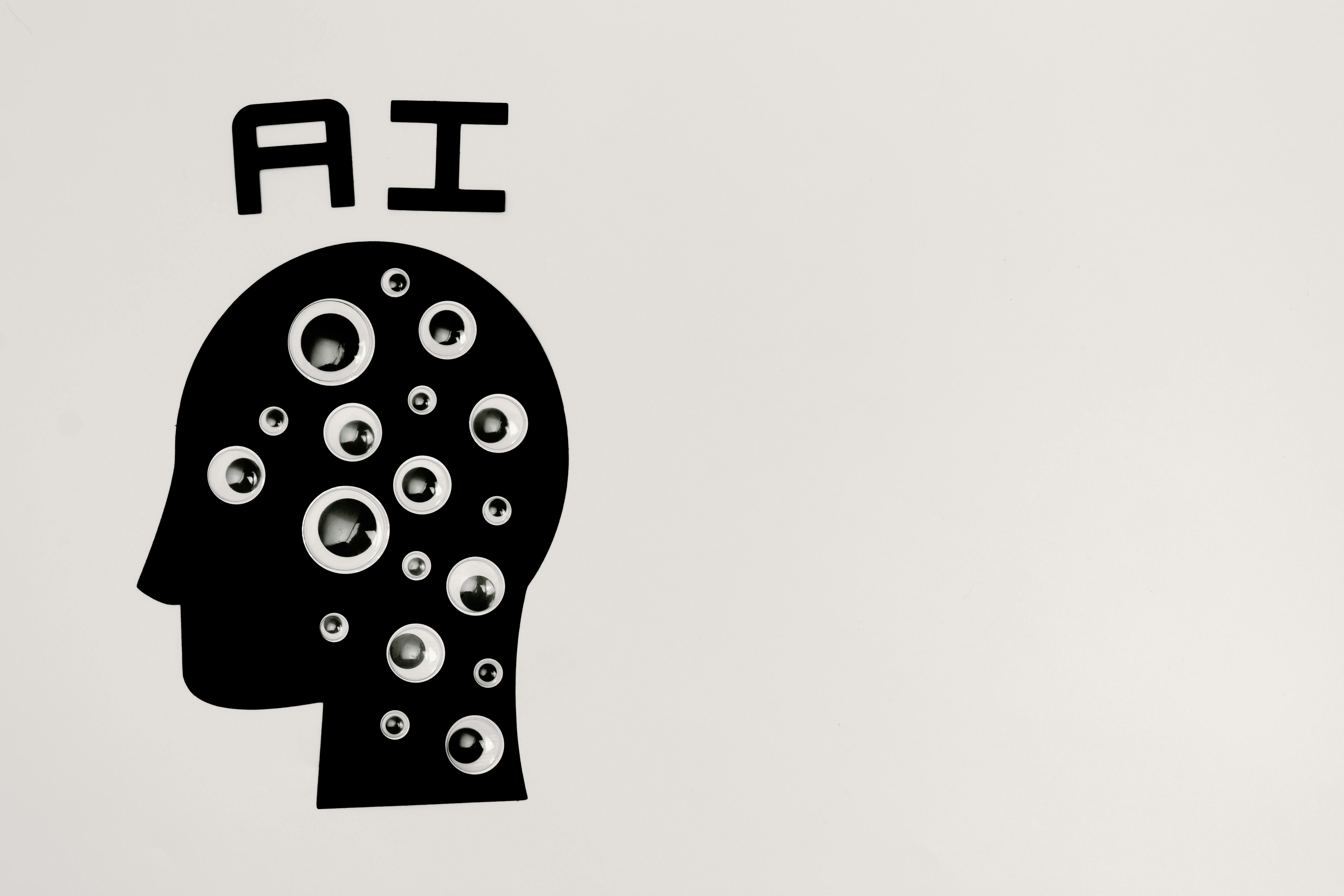
The AI Shift: From Employees to Owners
The AI Shift: From Employees to Owners
For the past 100 years, economic power has largely belonged to those who controlled capital, distribution, and organizational scale. If you wanted to build something meaningful, you needed a company. If you wanted leverage, you needed employees. If you wanted reach, you needed infrastructure.
Artificial Intelligence changes that equation.
We are entering a period where enterprising individuals will have access to what used to require entire departments: research teams, marketing agencies, financial analysts, customer service desks, software developers, and operational managers. AI is not just automation. It is capability amplification.
And that changes the job market fundamentally.
AI as the Great Equalizer
Historically, scale required hierarchy. Today, scale requires systems.
An individual entrepreneur can now:
• Run marketing campaigns with AI-driven copy, design, and segmentation
• Analyze investments with institutional-level modeling
• Build software products without coding expertise
• Operate hospitality or real estate portfolios using automated pricing, messaging, and analytics
• Produce media content at near-studio quality
The barrier to entry is collapsing.
This does not eliminate work. It eliminates friction.
In my view, AI provides unlimited intellectual leverage to those willing to take initiative. The entrepreneur with vision can now compete with organizations that previously required dozens of employees.
Fewer Job Seekers, More Builders
My belief is this: over time, AI will reduce dependency on large corporate structures and increase independent economic activity.
Why?
Because the core reason many people worked for large corporations was access to resources — systems, teams, capital allocation, market reach, brand trust. AI replicates many of these resources at the individual level.
When:
• You can draft contracts, build financial models, create marketing assets, and automate follow-up
• You can launch digital products in days instead of months
• You can analyze markets in minutes instead of hiring consultants
The psychological barrier to entrepreneurship drops dramatically.
Instead of asking, “Where can I get a job?” more people will ask, “What can I build?”
This is a subtle but powerful shift in mindset.
The Rise of the Solo Enterprise
We are likely to see the rise of what I call the “AI-augmented solo enterprise.”
One person.
Multiple AI systems.
Unlimited operational leverage.
A small real estate operator can manage dozens of properties.
A consultant can serve global clients without staff.
A creator can build distribution without traditional media.
A developer can launch SaaS products without a technical team.
The structure of value creation becomes horizontal instead of hierarchical.
AI becomes the invisible workforce.

What Happens to Traditional Jobs?
Some roles will shrink:
• Repetitive administrative work
• Basic customer service
• Routine content creation
• Entry-level analytical tasks
But new forms of work will emerge:
• AI system design and orchestration
• Prompt architecture and workflow automation
• Strategic integration roles
• Niche domain specialists amplified by AI
The key difference is that value will shift from execution to judgment.
AI can produce answers.
Humans must decide direction.
A Potential Counterpoint
There is a legitimate concern that AI could increase inequality. Those who understand how to leverage AI may compound their advantage rapidly, while those who rely solely on traditional employment may struggle.
If someone passively waits for a corporate job to define their career path, AI may reduce available opportunities in certain sectors.
But if someone develops entrepreneurial thinking — ownership mindset, adaptability, and systems thinking — AI becomes a multiplier rather than a threat.
The technology itself is neutral.
The outcome depends on agency.
My View: AI Favors the Entrepreneurial Mind
I believe we are moving toward a world where:
• Ownership matters more than employment
• Systems matter more than titles
• Agility matters more than stability
AI lowers the cost of experimentation. You can test ideas quickly. You can prototype businesses cheaply. You can automate operations early.
In that environment, the number of “job seekers” may decline not because work disappears, but because individuals will increasingly choose to create their own economic paths.
This does not mean corporations vanish. It means they become leaner, more strategic, and more technology-driven.
The middle layers compress.
The edges expand.
The Real Question
The impact of AI on jobs is not simply about displacement.
It is about transformation of identity.
Are we employees?
Or are we operators?
Are we waiting to be hired?
Or are we designing systems that create value?
AI gives individuals tools that were previously available only to institutions.
The question is not whether AI will take jobs.
The real question is:
Will you use AI to build leverage, or will you wait for someone else to use it for you?
Explore our estate collection at LuxStayUSA.com
Inquire about weddings, corporate retreats, and private gatherings.
